Community Circles — mobile & gamified e-participation platform
Location-based mobile game that turns citizens into active participants in urban governance through geo-referenced contributions with expanding impact areas.

Insight
Smartphone applications for citizen engagement in urban governance tend to reduce participation to one-way issue reporting: "report a pothole" patterns that don't create lasting involvement. Community Circles was designed to address that limitation.
Idea
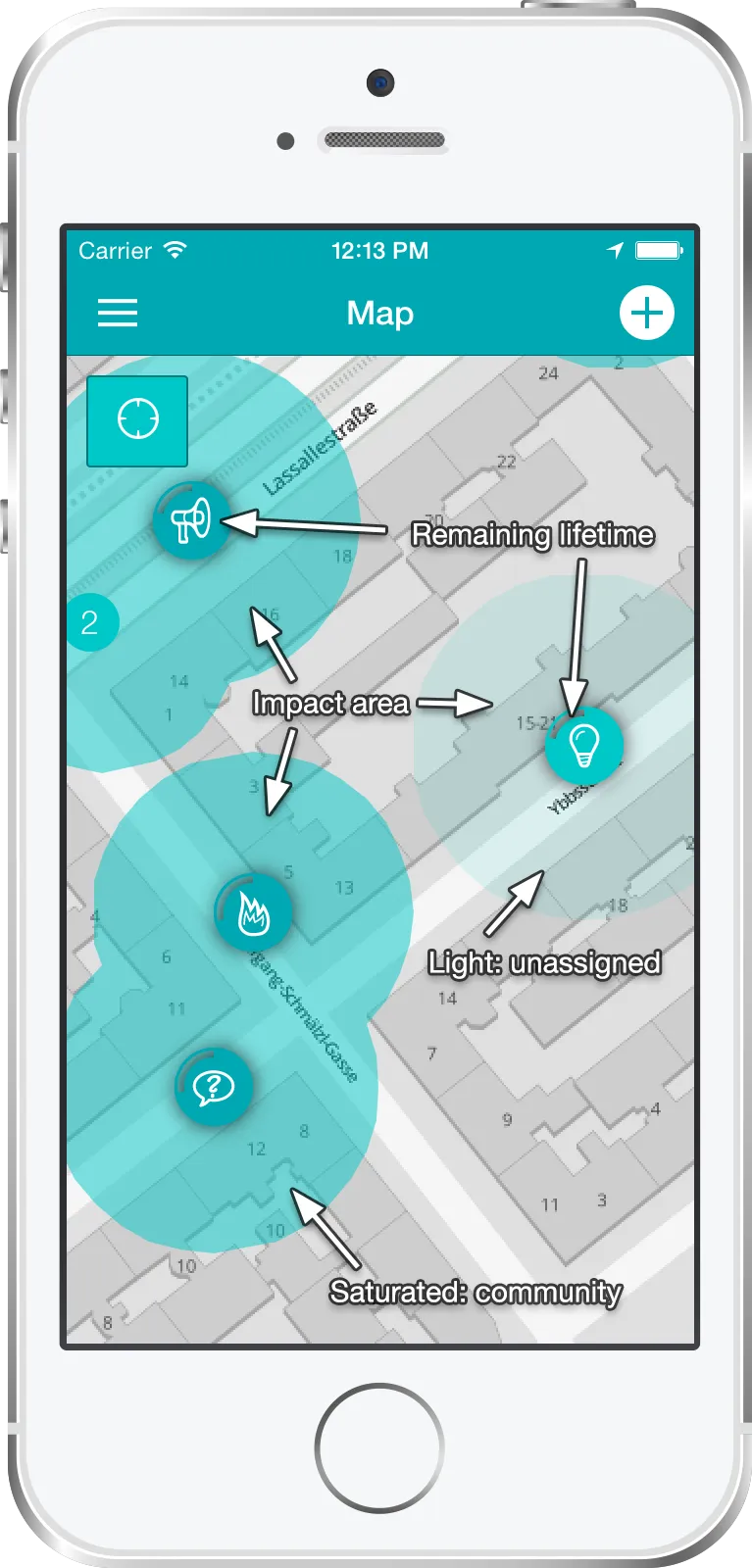
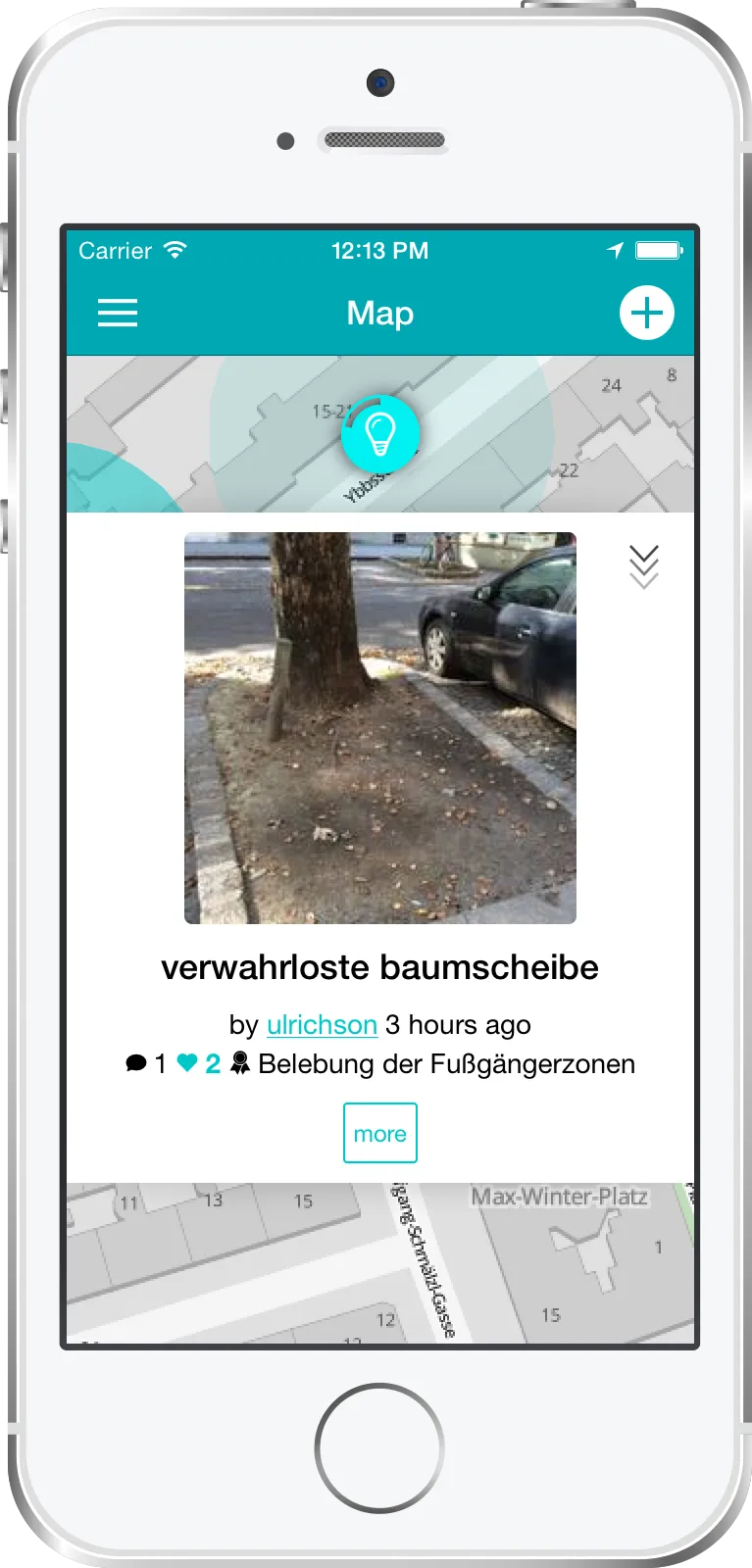
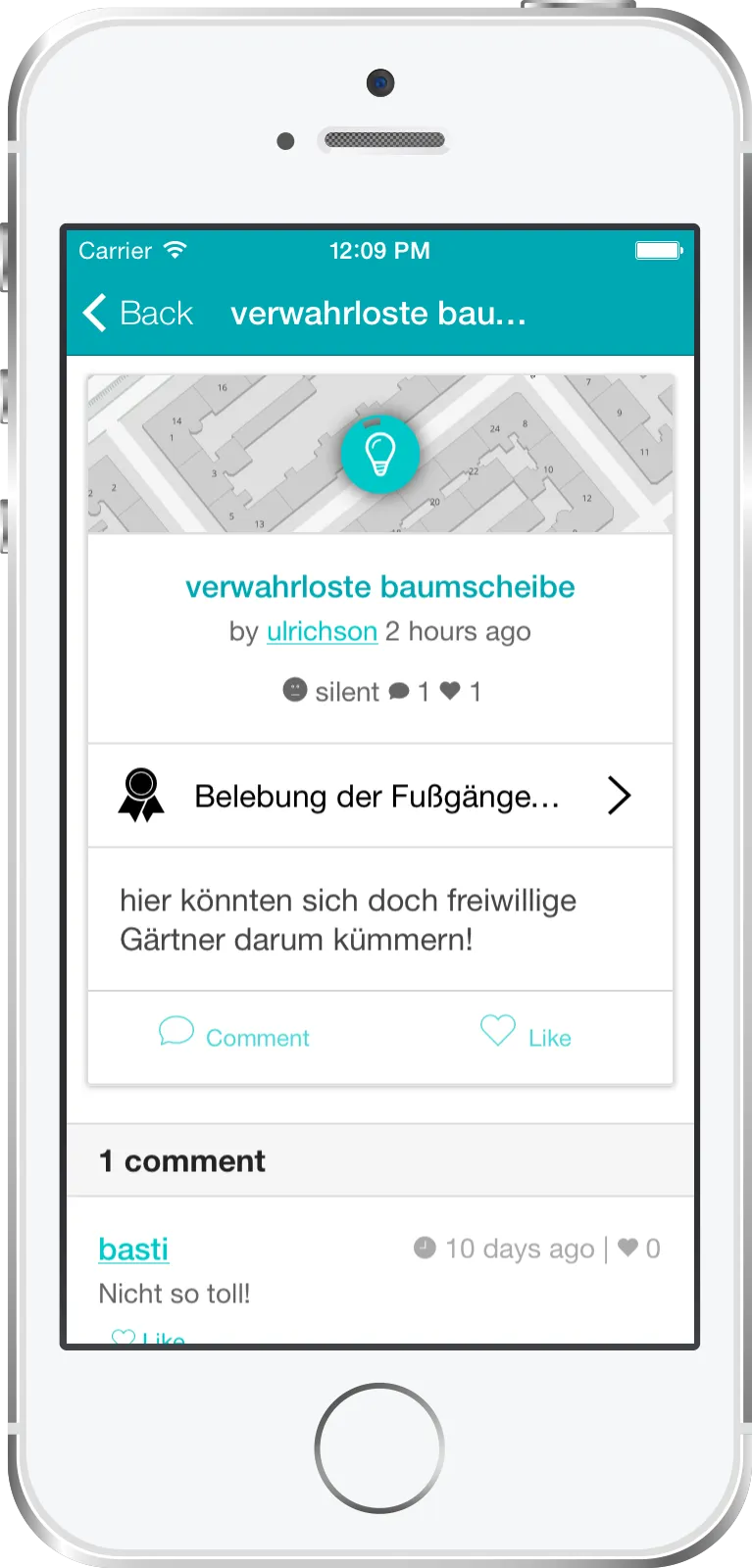
Community Circles is a location-based mobile game that encourages citizens to create geo-referenced contributions (ideas, issues, opinions, polls), each with an impact area that expands as other citizens engage. Adjacent impact areas can merge into bigger communities of discussion. Contributions have a lifespan, extendable through engagement. The goal is to cultivate active communities around a place and a topic, not just collect isolated reports.
My role
The concept was mine, and I contributed major parts of the work: the game mechanics behind impact areas and their merging, the interaction and interface design, and the implementation of the mobile client and its backend.
Implementation
The platform combines a hybrid mobile client with a backend service. The client runs on iOS and Android via the Ionic framework. The backend is built on Django with PostGIS for spatial queries, delivered to the client through a REST API.
Process
The project ran as research, but it shipped as a real app rather than a prototype: iOS and Android builds that participants installed and used themselves. What the research framing changed was the evaluation, which had to test the engagement assumptions rather than just show the app working. I worked that out together with another researcher on the programme.
Challenges
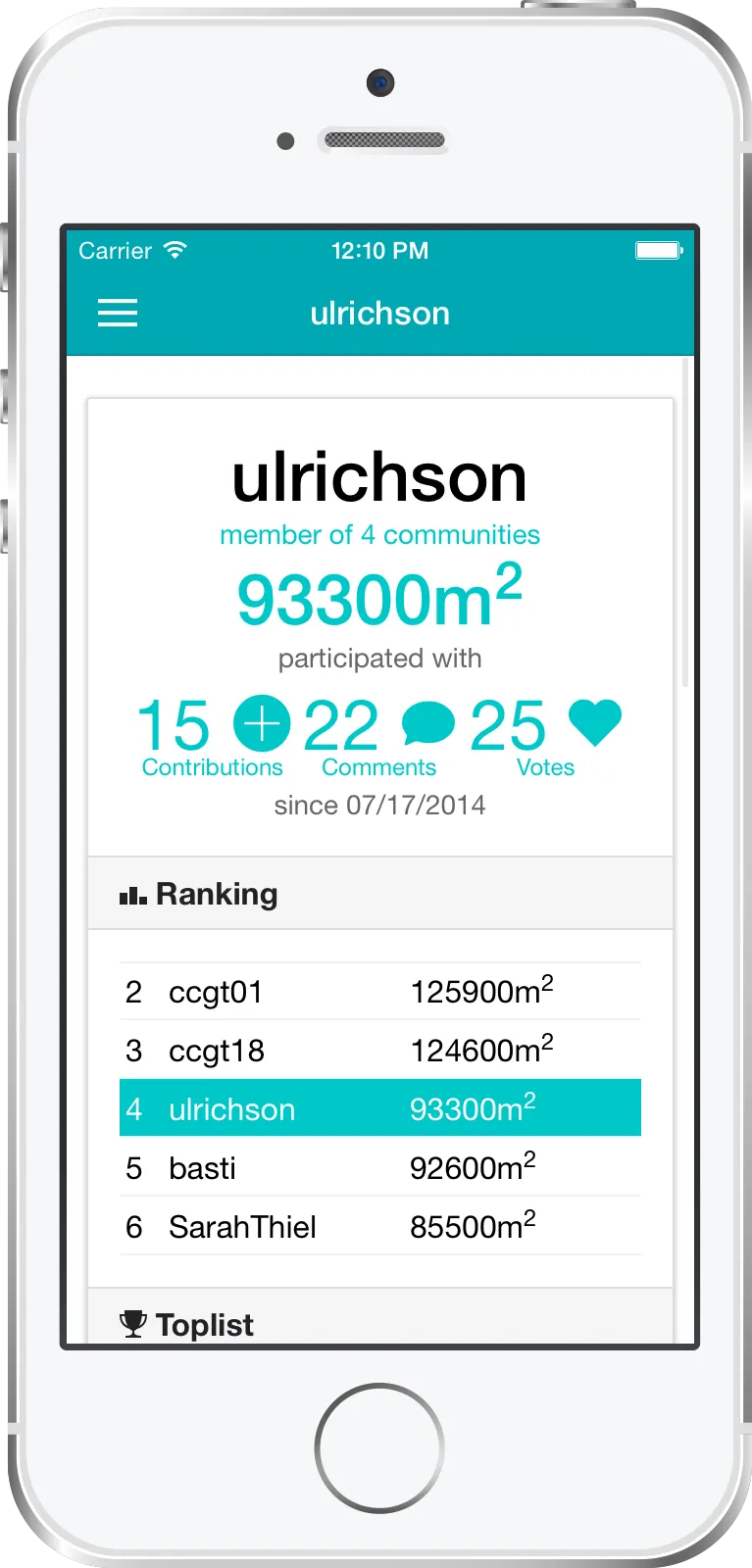
Gamification that civic participation can carry. Ranks, scores, and a player profile were meant to turn one-off reporting into sustained involvement. The game layer mattered less over time than the concept had assumed. What held participants was the substance: the contributions, the map, and the place they were tied to.
Impact
The concept was evaluated through a live game trial with real users around a municipal district in Vienna. A work-in-progress poster was presented at CHI'14 in Toronto within the interdisciplinary b-Part research programme, which explored new forms of civic engagement in the smart-city context.